John Sweeney lent me James's papers which I scanned. The Government's records of James's service are available for inspection at the National Archives at Kew, London under WO 97 / 372 / 86, also available for download (at a cost) from FindMyPast.
Account Book
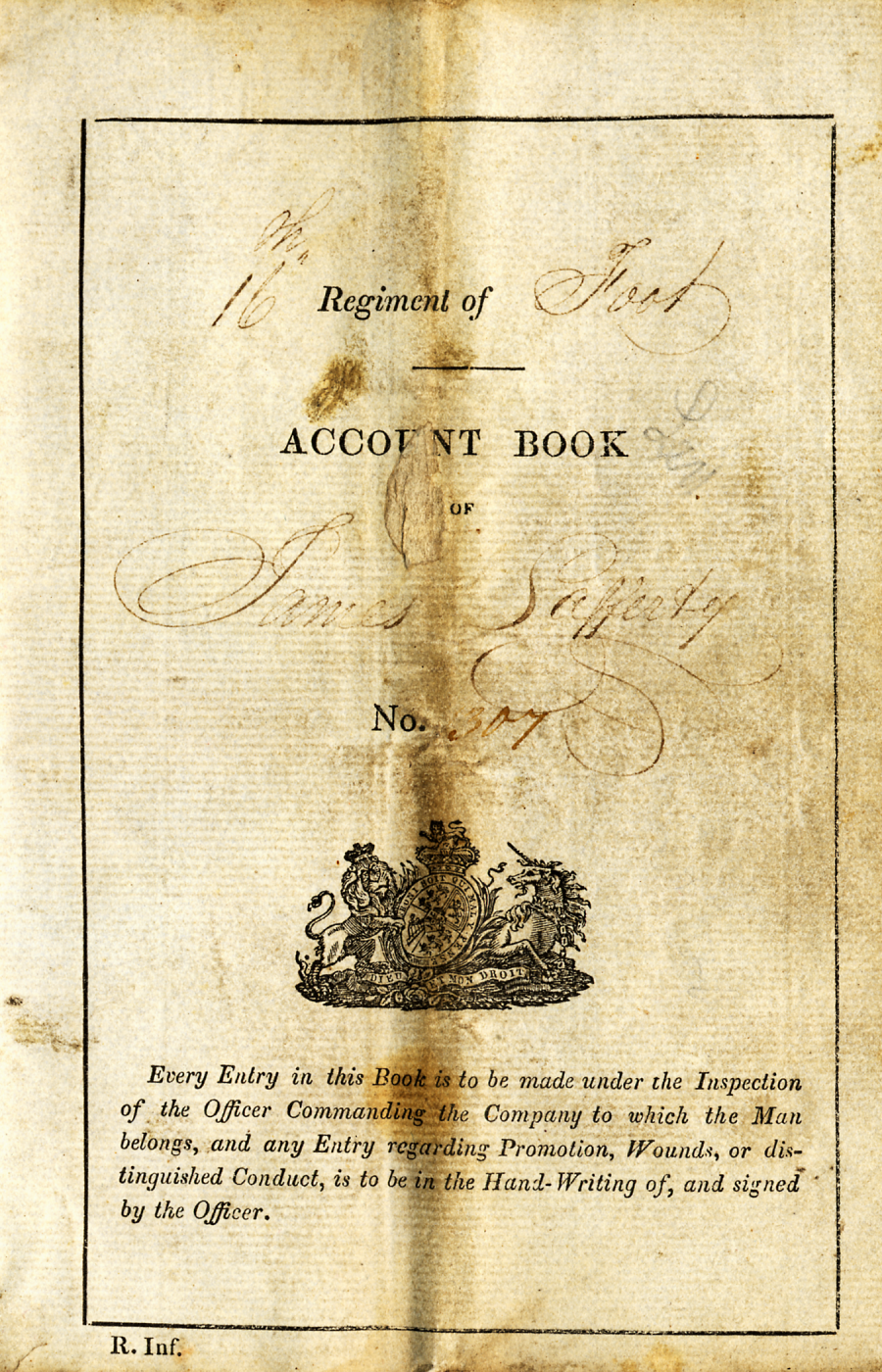
The 16th Regiment of Foot
Originally raised as Douglas's Regiment in 1688 for William of Orange, its first battle honour was Namur, 1695, in the War of the League of Augsburg, also known as the War of the Grand Alliance (against Louis XIV of France); it was renamed the 16th Regiment of Foot in 1751. Under the Cardwell reforms of 1881, it became the Bedfordshire Regiment, redesignated Bedfordshire and Hertfordshire Regiment in 1919 and in 1953 was amalgamated with the Essex Regiment to form the 3rd East Anglian Regiment (16th/44th). In 1964 it became the 3rd Battalion of the Royal Anglian Regiment and ceased to exist in 1992 when that regiment was reduced to two battalions.
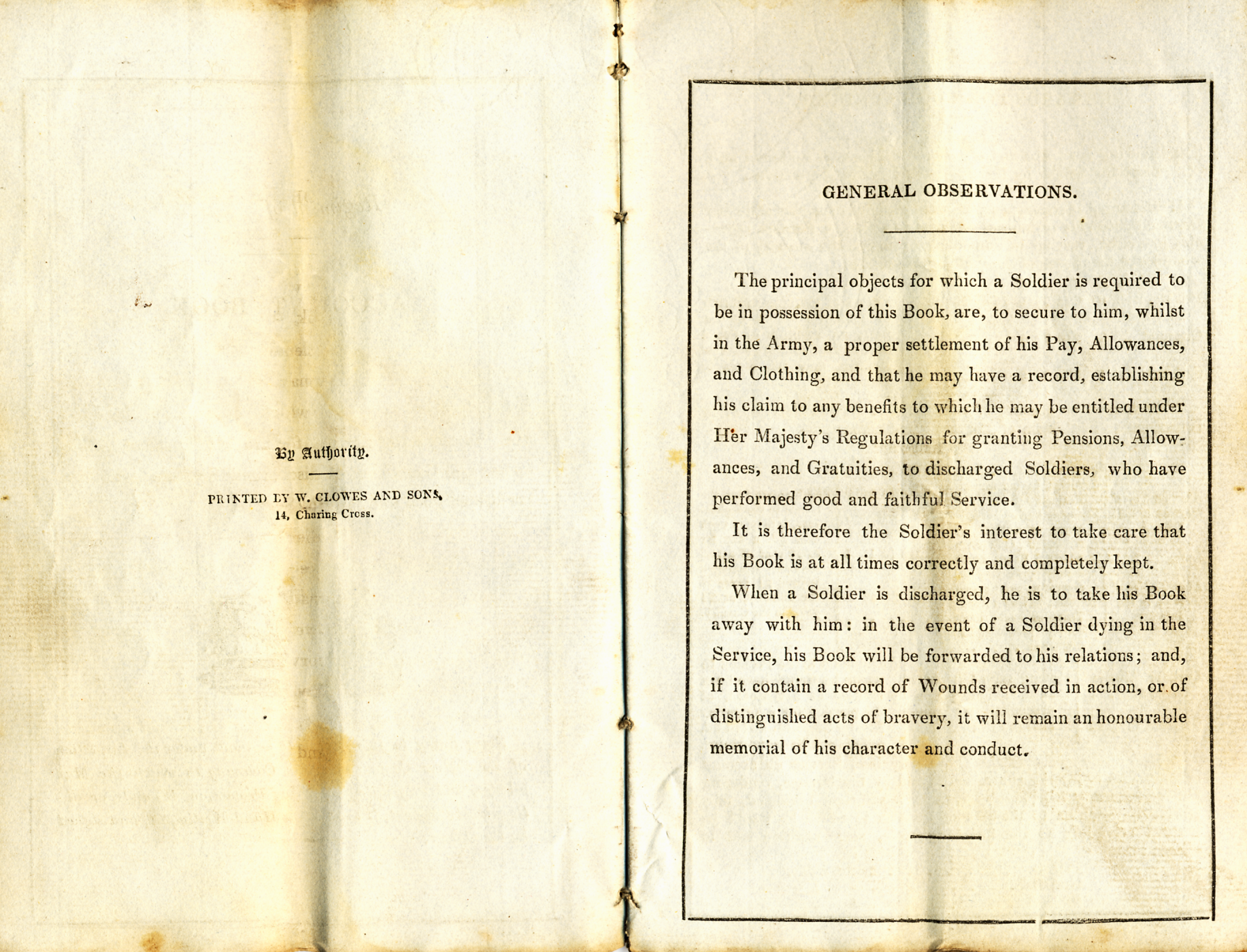
|
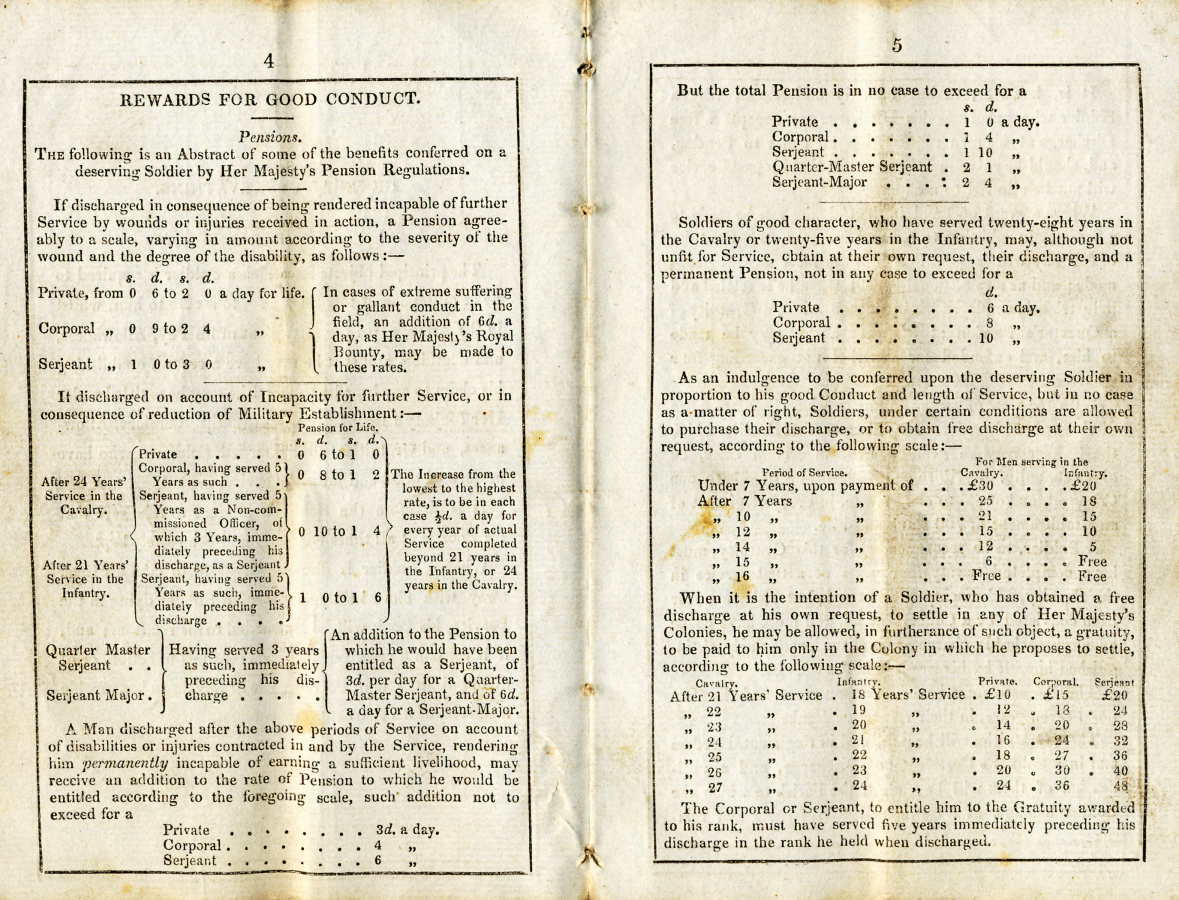
|
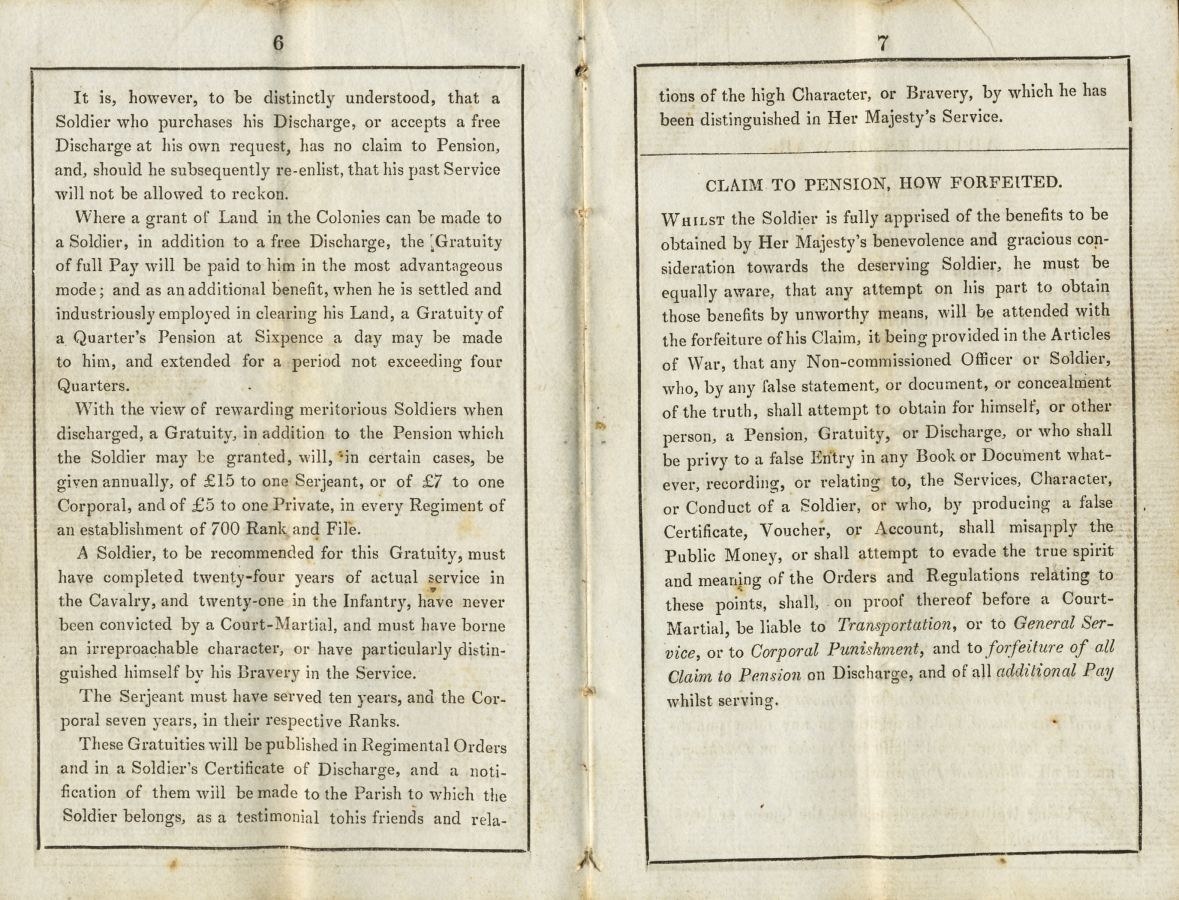
|
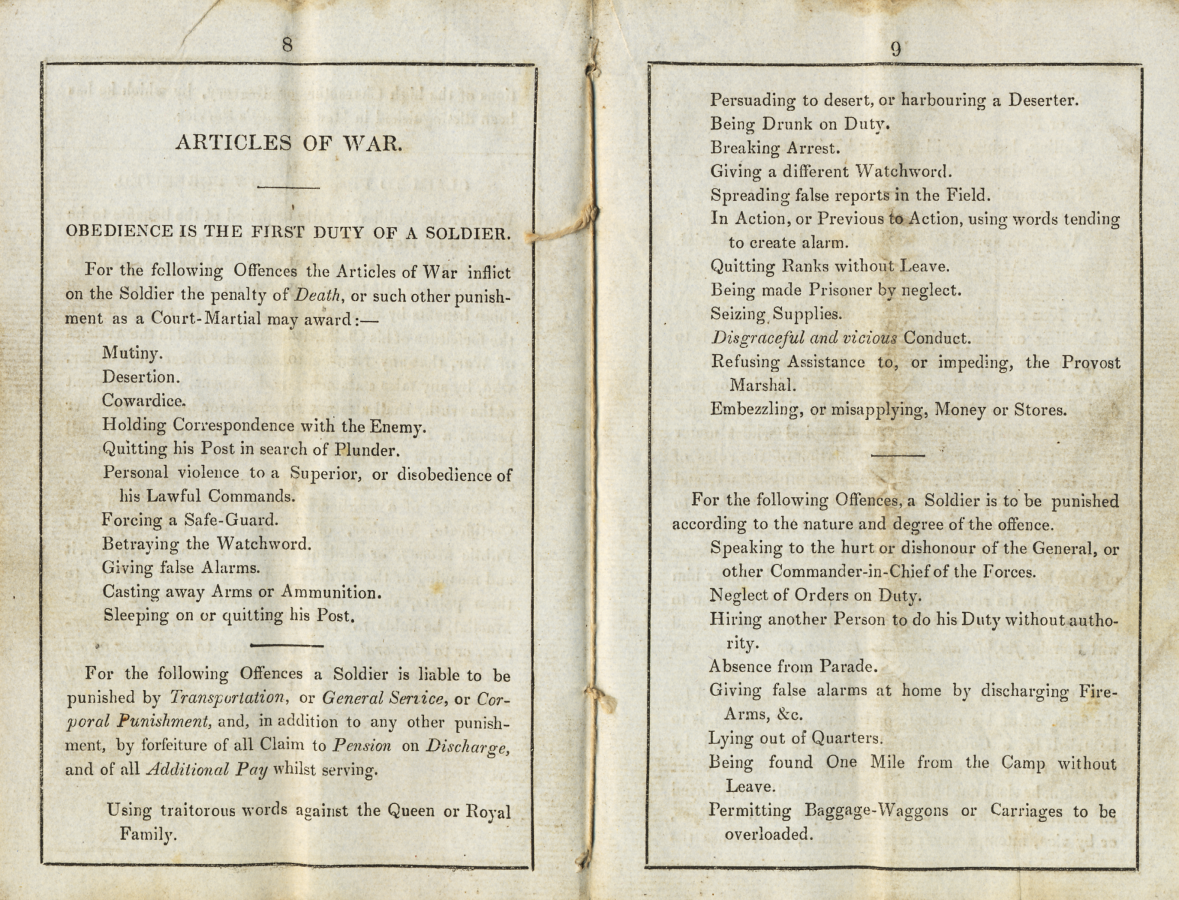
|
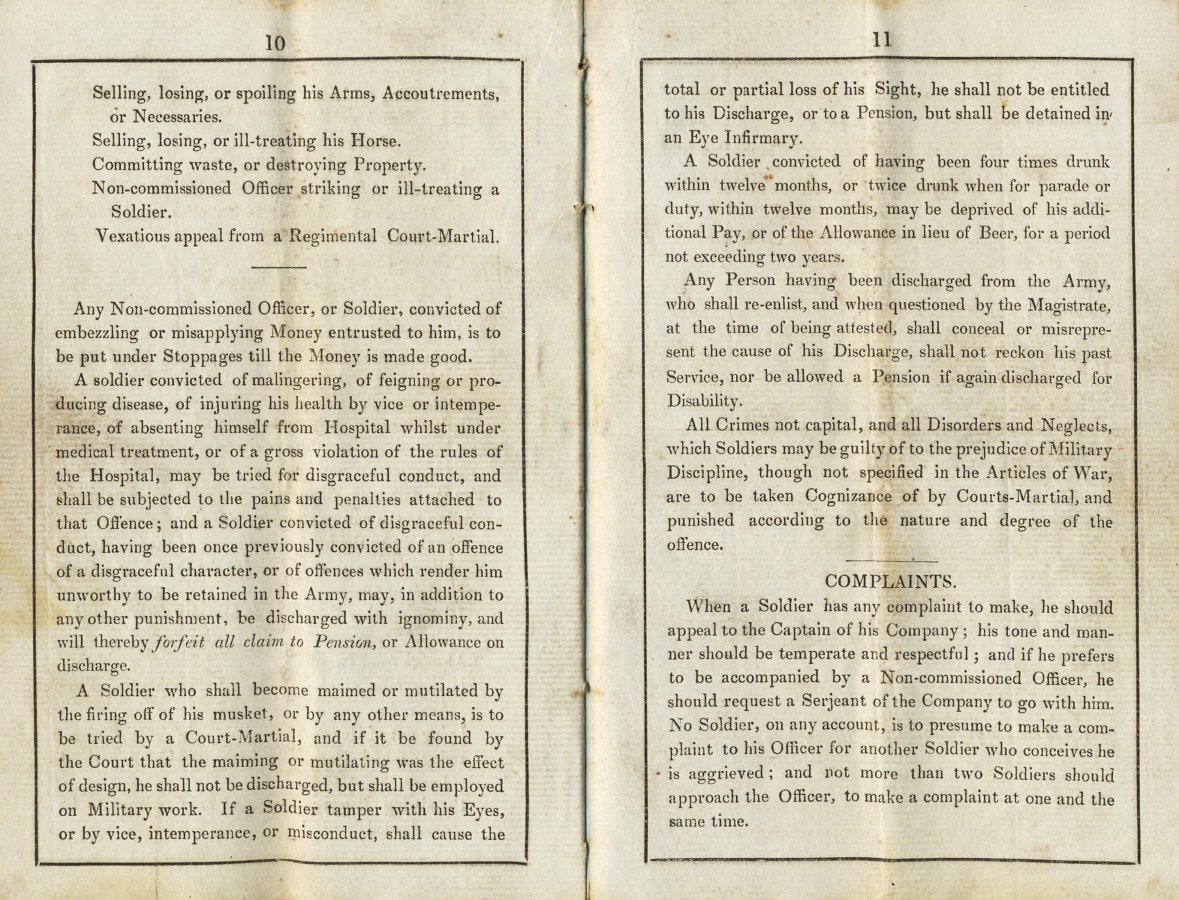
|
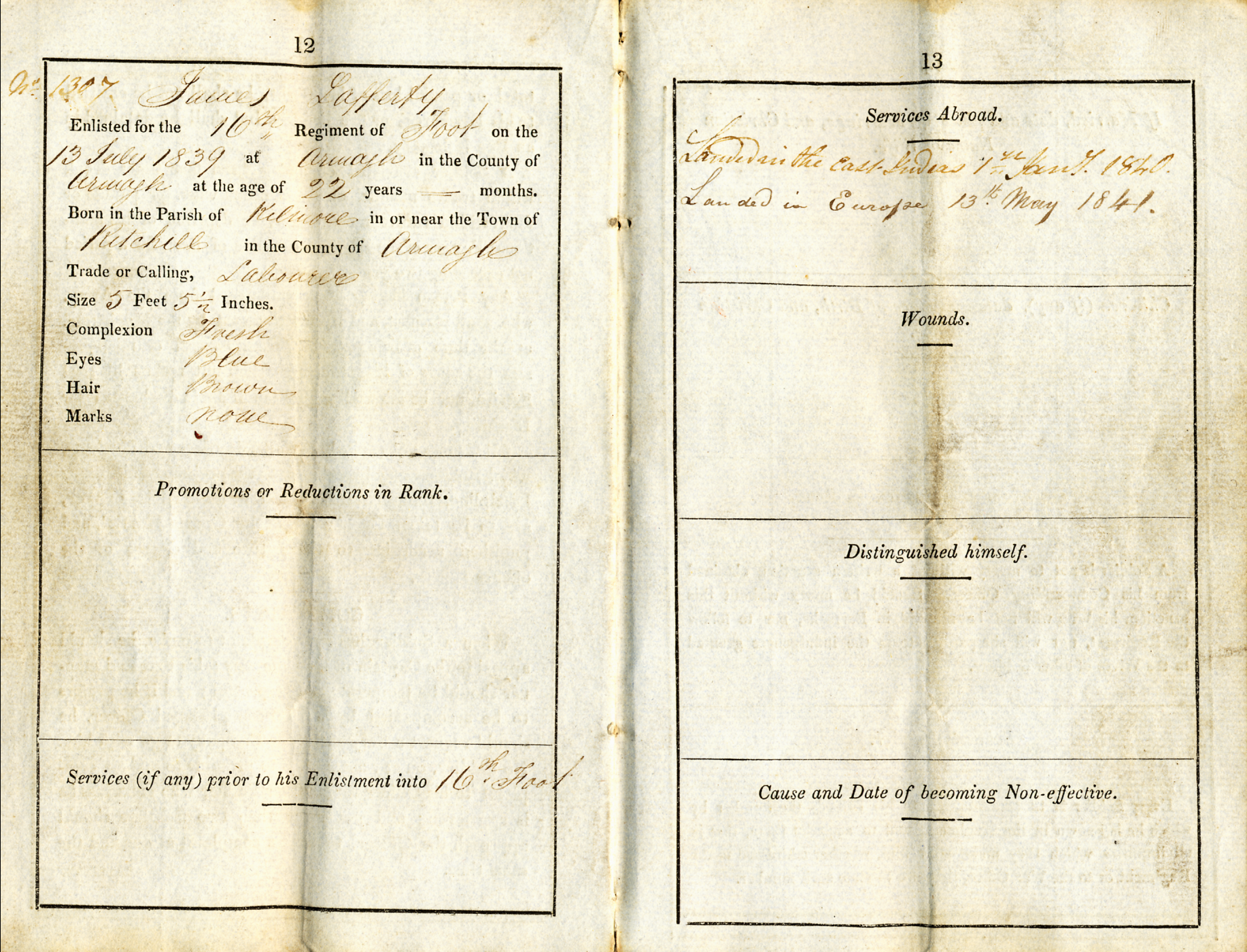
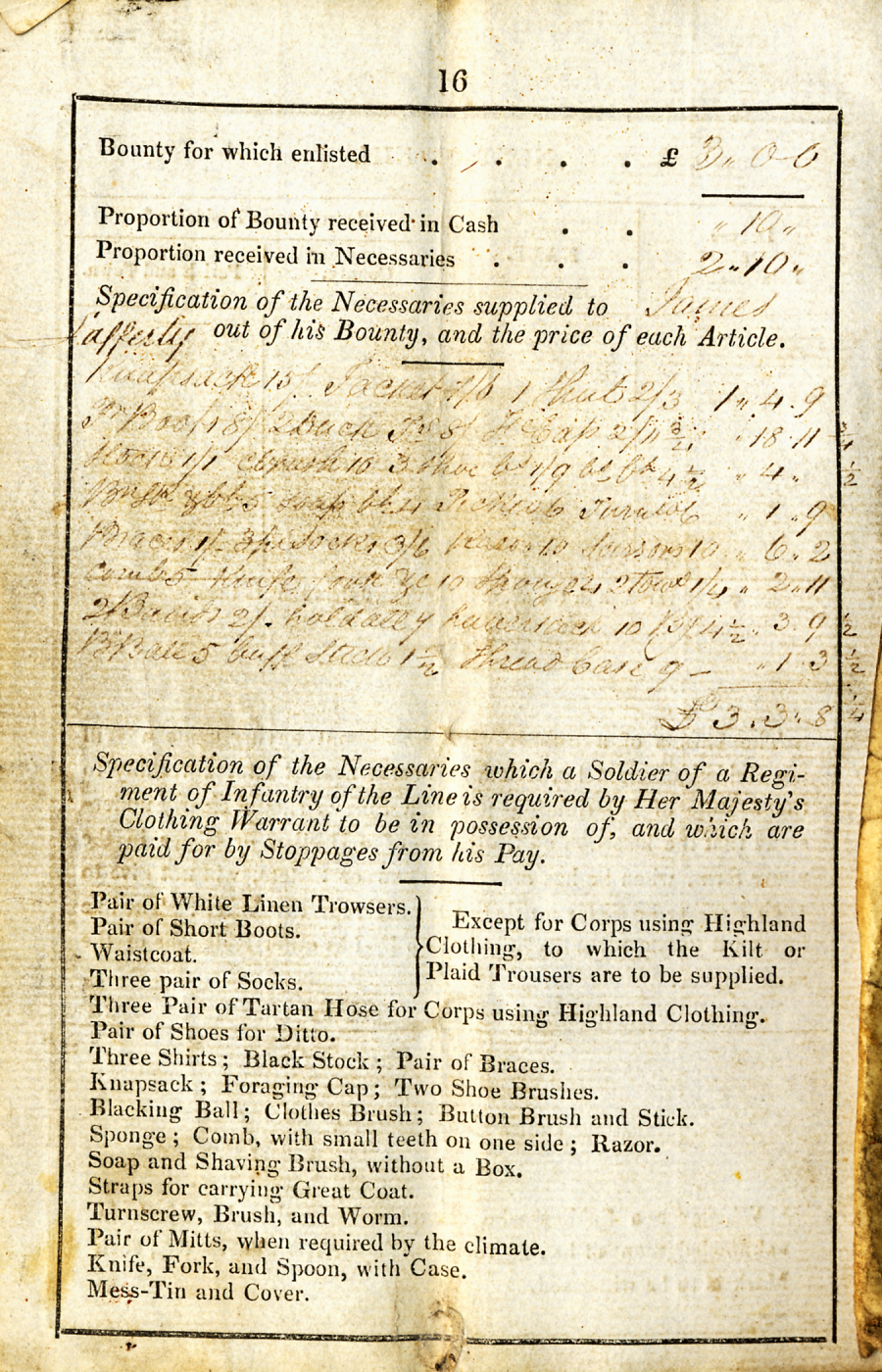
On Saturday, July 13, 1839, at the age of 22, James enlisted at the town of Armagh for the 16th Regiment of Foot, for a bounty of three pounds – ten shillings of which he received in cash, the remainder going towards the purchase of his kit (listed on Page 16).
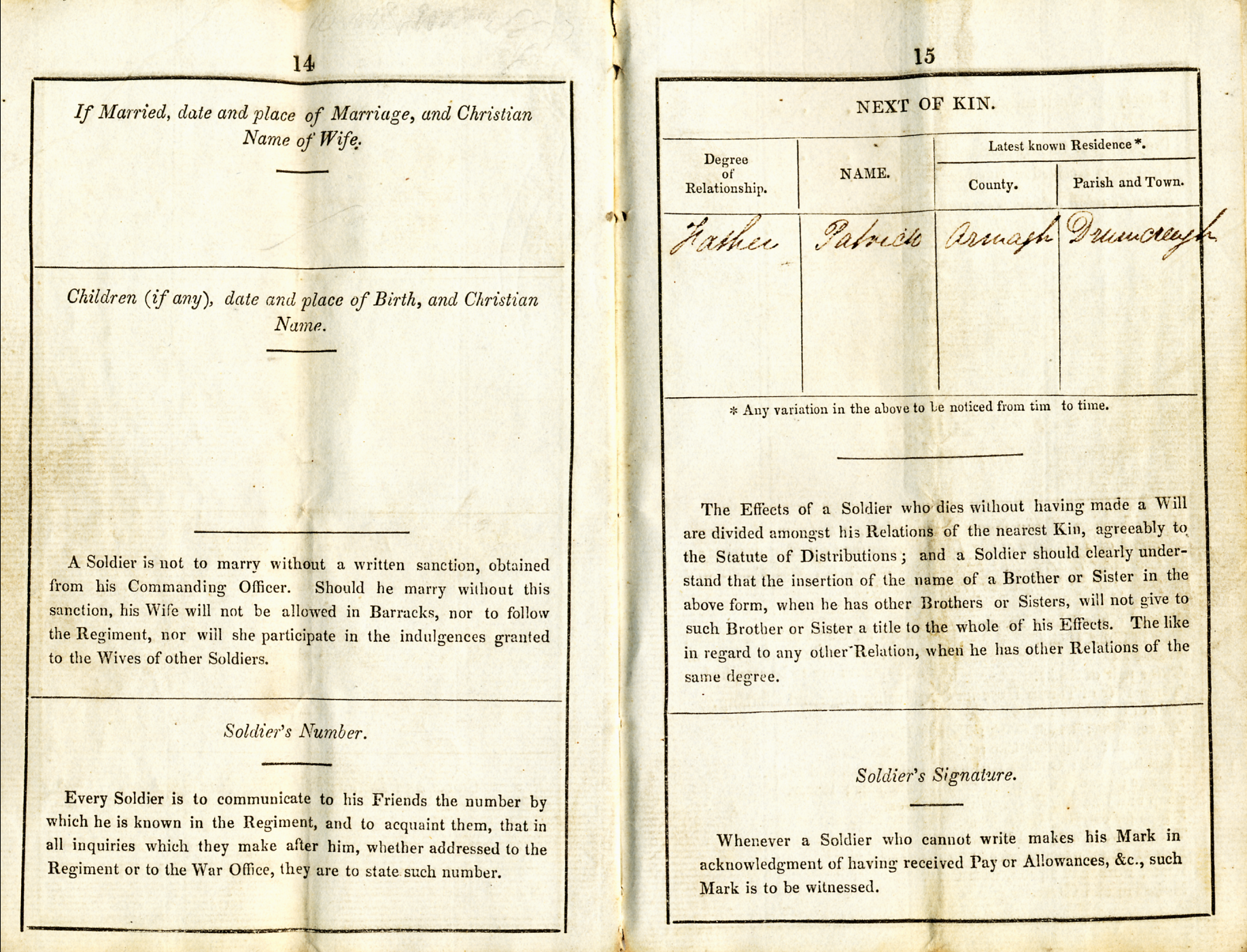
He gave his birthplace as the parish of Kilmore in County Armagh, at or near the town of Ritchill [now Richhill], occupation labourer and is described as height 5'5", fresh complexion, blue eyes, brown hair and no distinguishing marks. His next of kin was his father, Patrick, resident at that time in Drumcreagh, Co. Armagh. There is nothing entered in the space for wife and children.
|
|
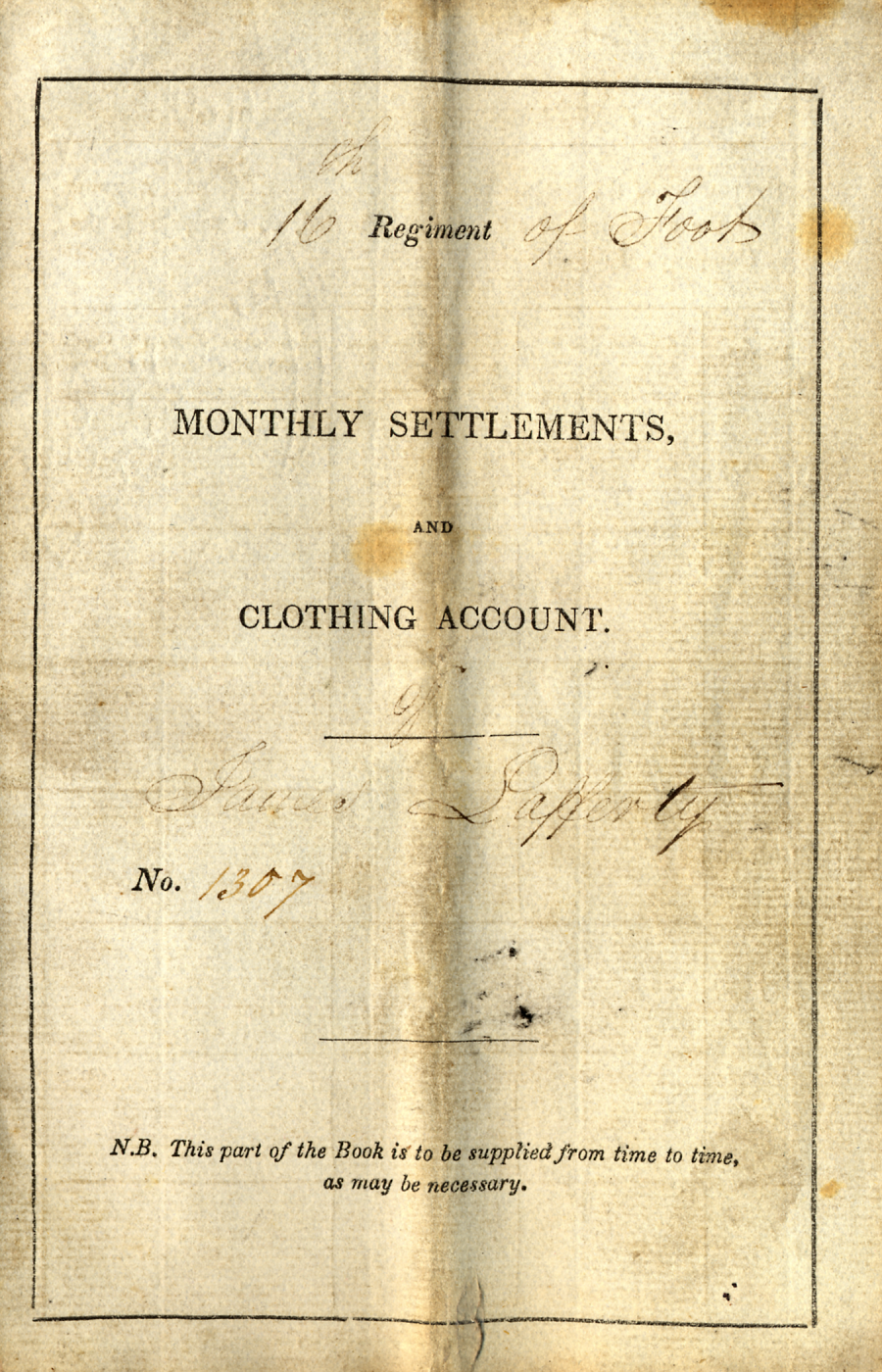
Monthly Settlements and Clothing Account
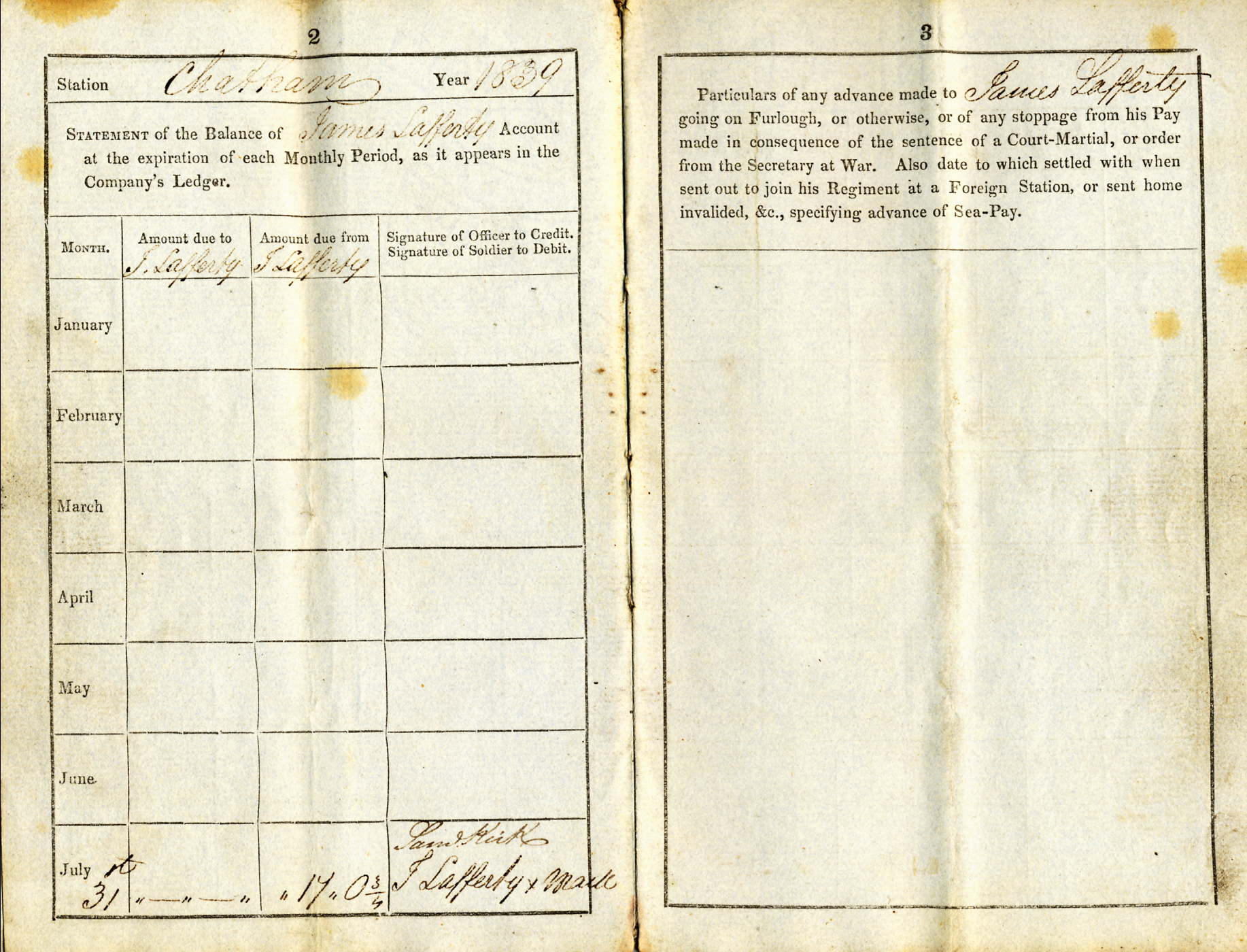
1839
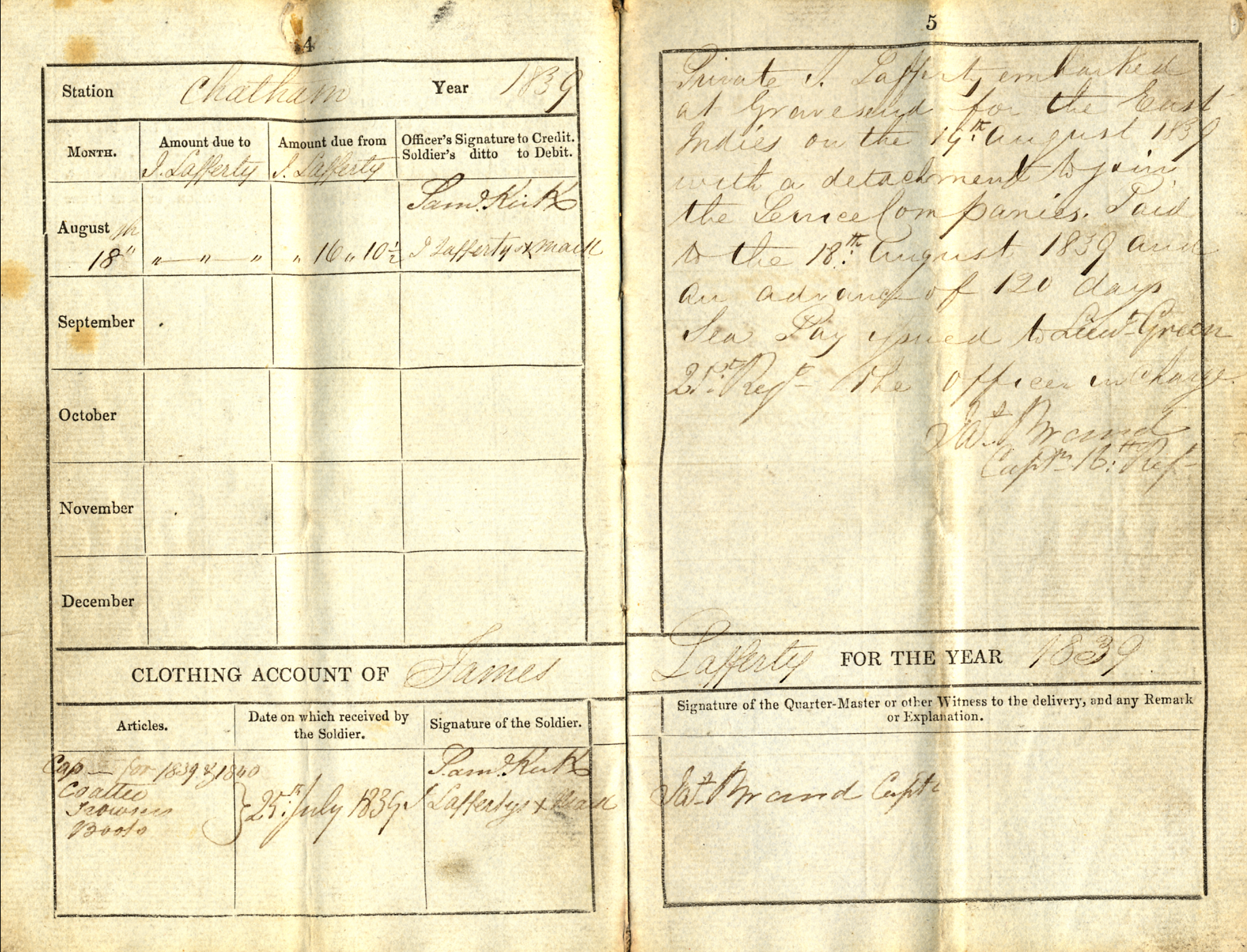
After a month at Chatham, where he was issued with Cap (for 1839 & 1840), Coatee, Trowsers and Boots (presumably just for 1839) on July 25,
|
|
"Private J Lafferty embarked at Gravesend for the East Indies on the 19th August 1839 with a detachment to join the Service Companies. Paid to the 18th August 1839 and an advance of 120 days Sea Pay issued to Lieut Green 21st Regt the officer in charge.
Jas Brand, Captn 16th Reg"
1840
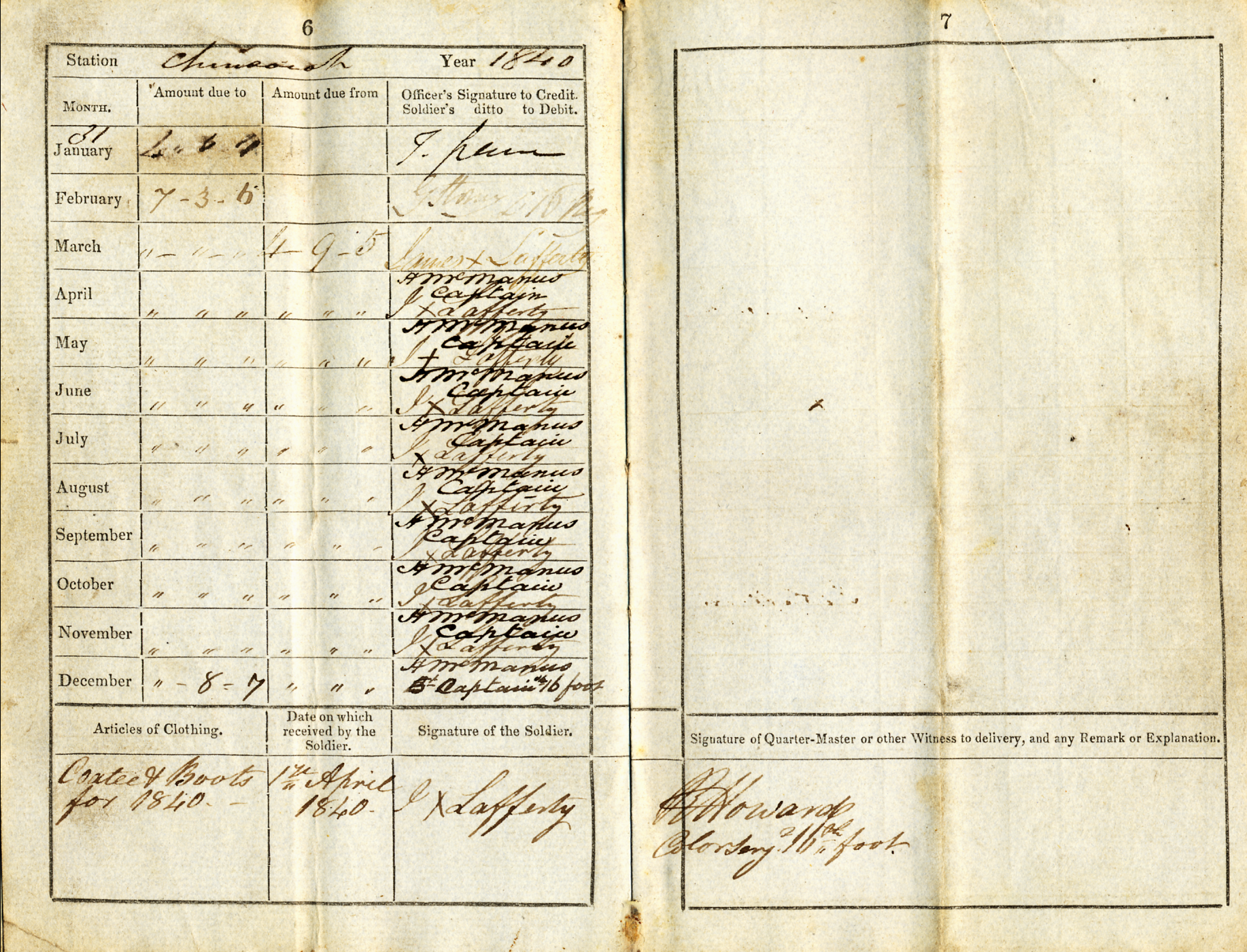
From his Pay Book, James landed in the East Indies on January 7, which means a passage of 141 days. Here, he was issued with Coatee & Boots on April 1.
His station for this year appears to be Chinsurah. Chambers's Encyclopedia has this entry —
Chinsura a town on the right bank of the Hooghly some 22 miles north of Calcutta, from 1656 to 1825 the chief Dutch settlement in west Bengal, India, though it retained no real importance after it was taken by Clive in 1759. Pop. (1941) 49,081.
[A Google search on Chinsurah produced 1,100 hits, one of which is the town home page www.chinsurah.com. When the search was refined to include 16th Foot, the hits reduced to 10 including a couple of military sites, a couple of family history sites and a couple of historical sites. The others were accidental coincidences of 16th (usually a date) and foot as in perambulation. A quick look at some of the sites produced no useful information.]
1841
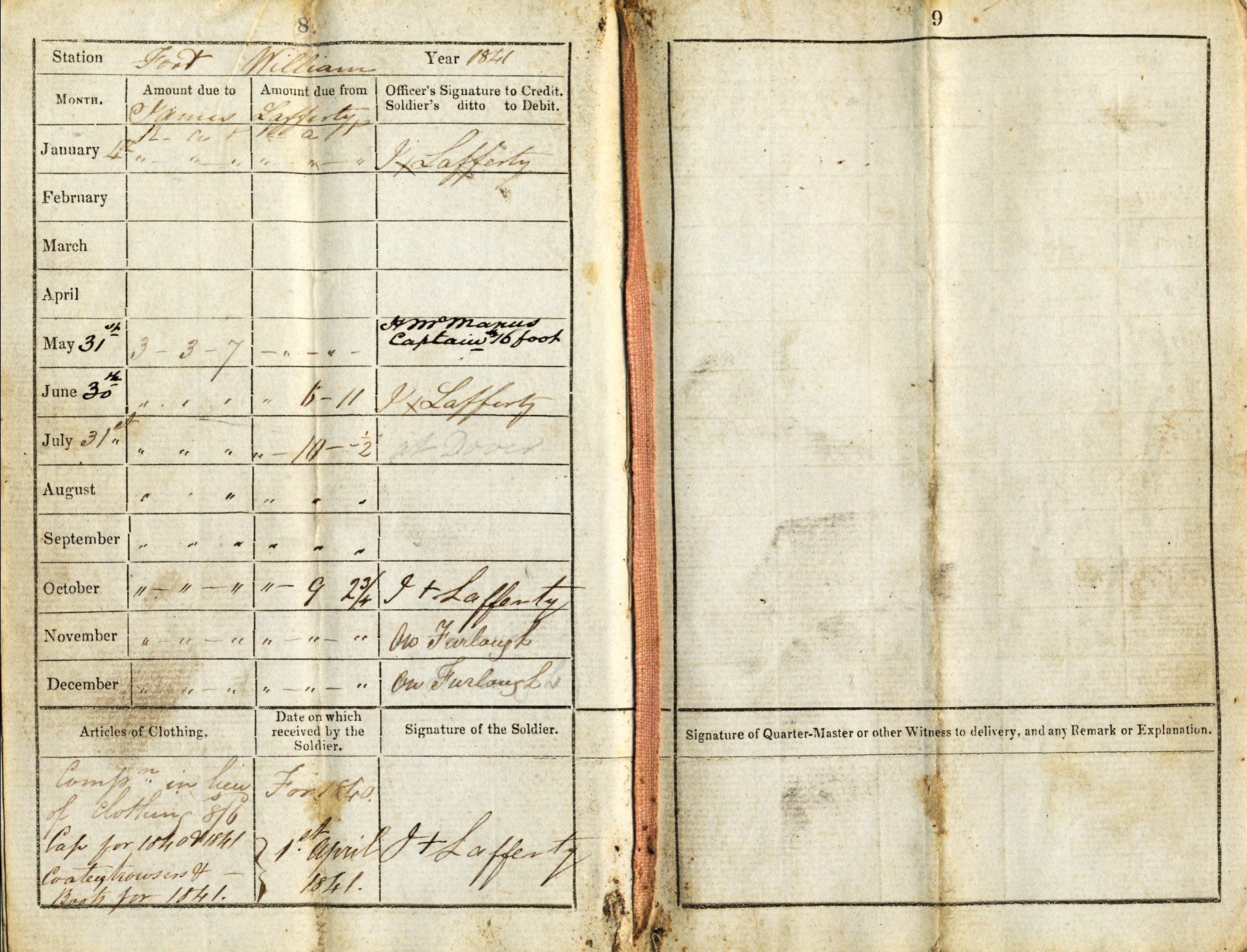
There is no explicit reference to James's departure from the East Indies but his Monthly Settlements entry for January is dated the 4th rather than the end of the month, so I'll guess he embarked on the 5th.
"Landed in Europe 13th May 1841"
— 129 days after embarkation, a
somewhat faster journey this time.
His kit issue, "Cap for 1840 & 1841, Coatee, trowsers & boots for 1841" is dated April 1, when he was still aboard ship, and he also received 8/6d compensation in lieu of clothing for 1840 [trowsers? – cost 8/- when he joined up], but this entry in the same hand may have been made at a different (earlier) time.
For this year, his station was Fort William. If this entry was made at the beginning of January, then that was the main military garrison in Calcutta, otherwise I think we can assume that it is the town in Scotland. However, he doesn't show up in the 1841 Census (June 7) there. At the end of July, he was apparently at Dover and "On Furlough" in November, December and January 1842.
1842
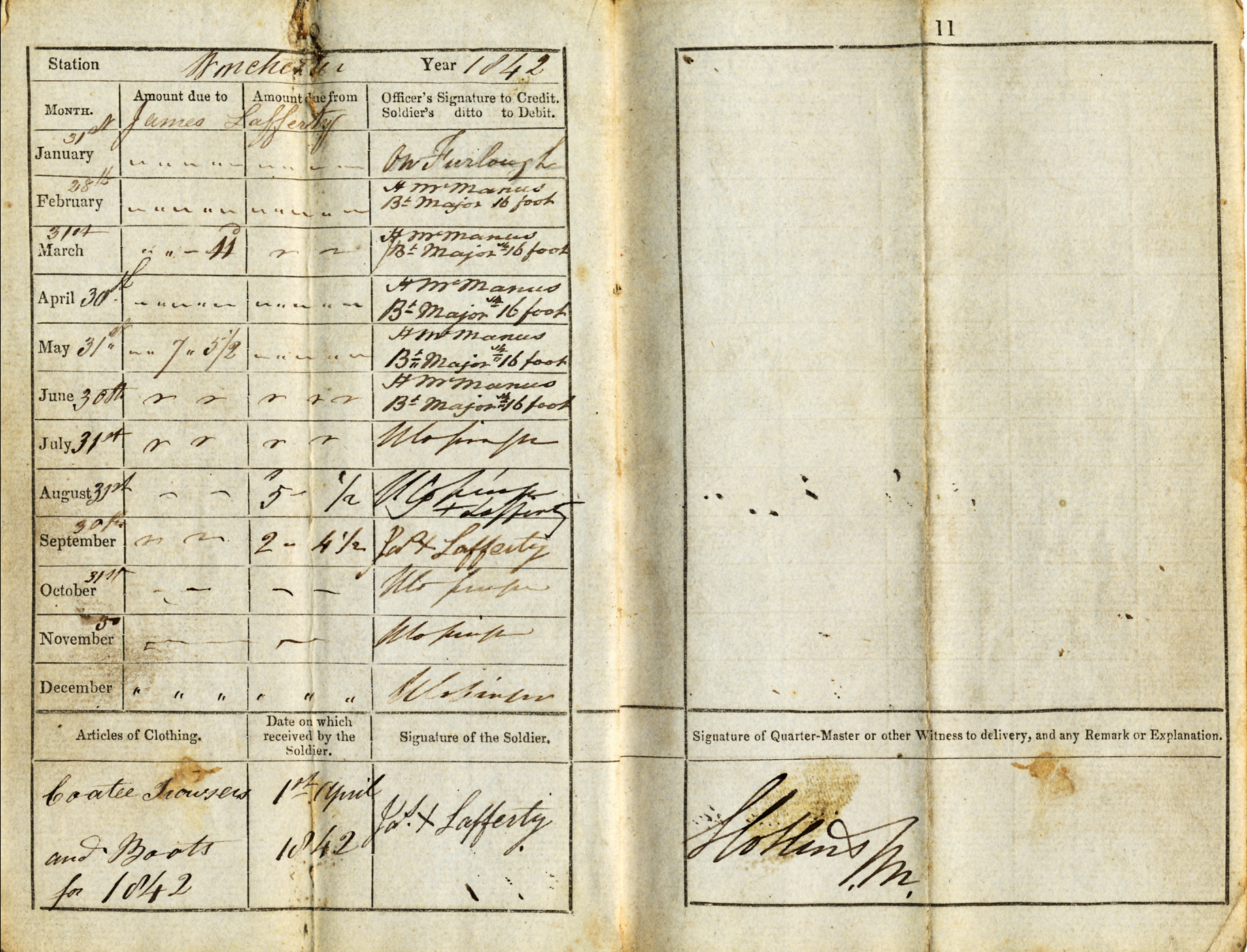
For this year, James's station was Manchester, and he received his Coatee, trowsers and boots on April 1.
1843
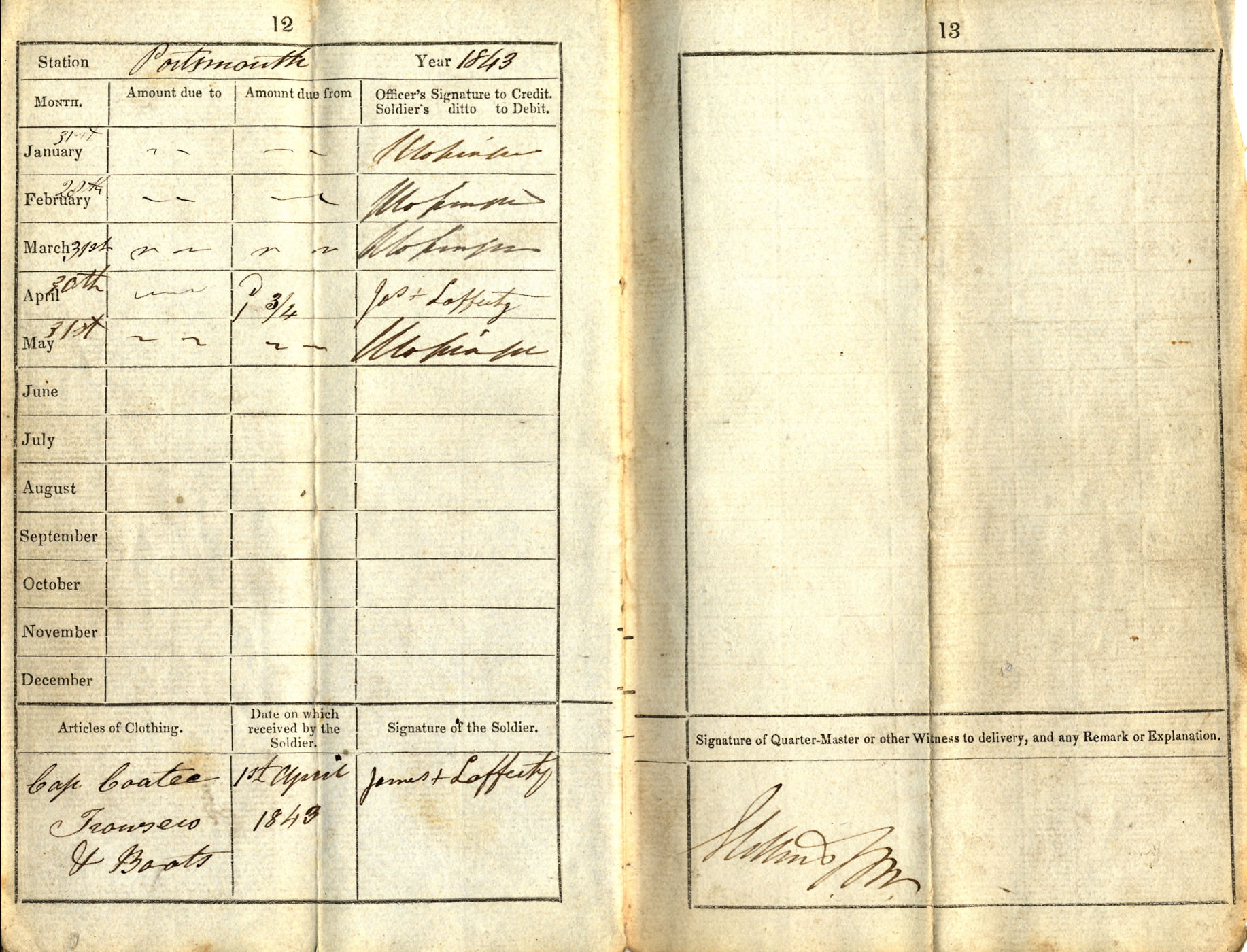
For this year, James's station was Portsmouth, and he received his Coatee, trowsers and boots on April 1.
There are no entries in the account after May. The only previous blank entries were when he was at sea going to and from the East Indies. All other nil entries have been signed off. I am at a loss to explain this.
1844
For this year, James's station was Banagher (Co. Offally, on the banks of the Shannon), and his book is filled in from January with nothing unusual about the entries.
Discharge
|
|
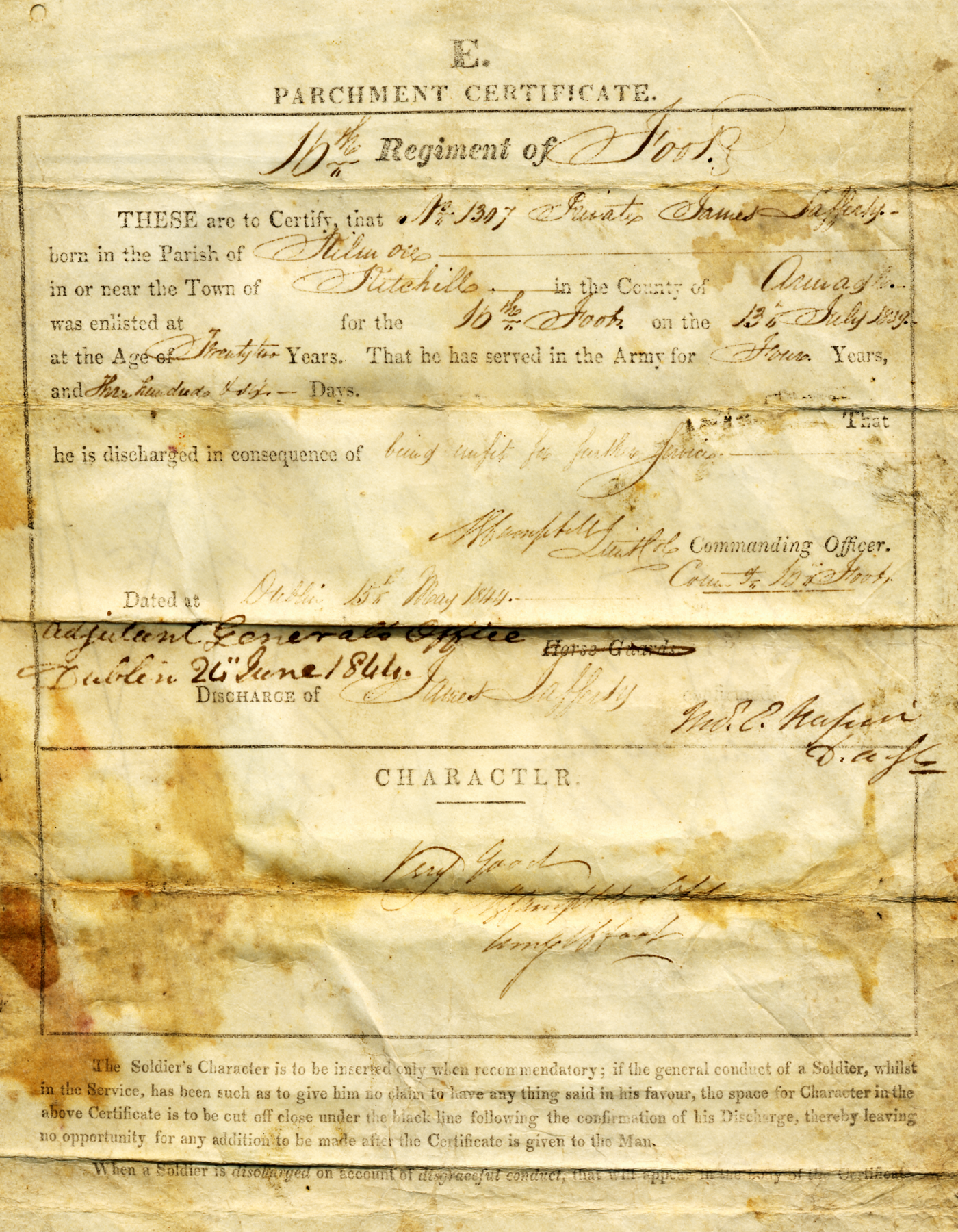
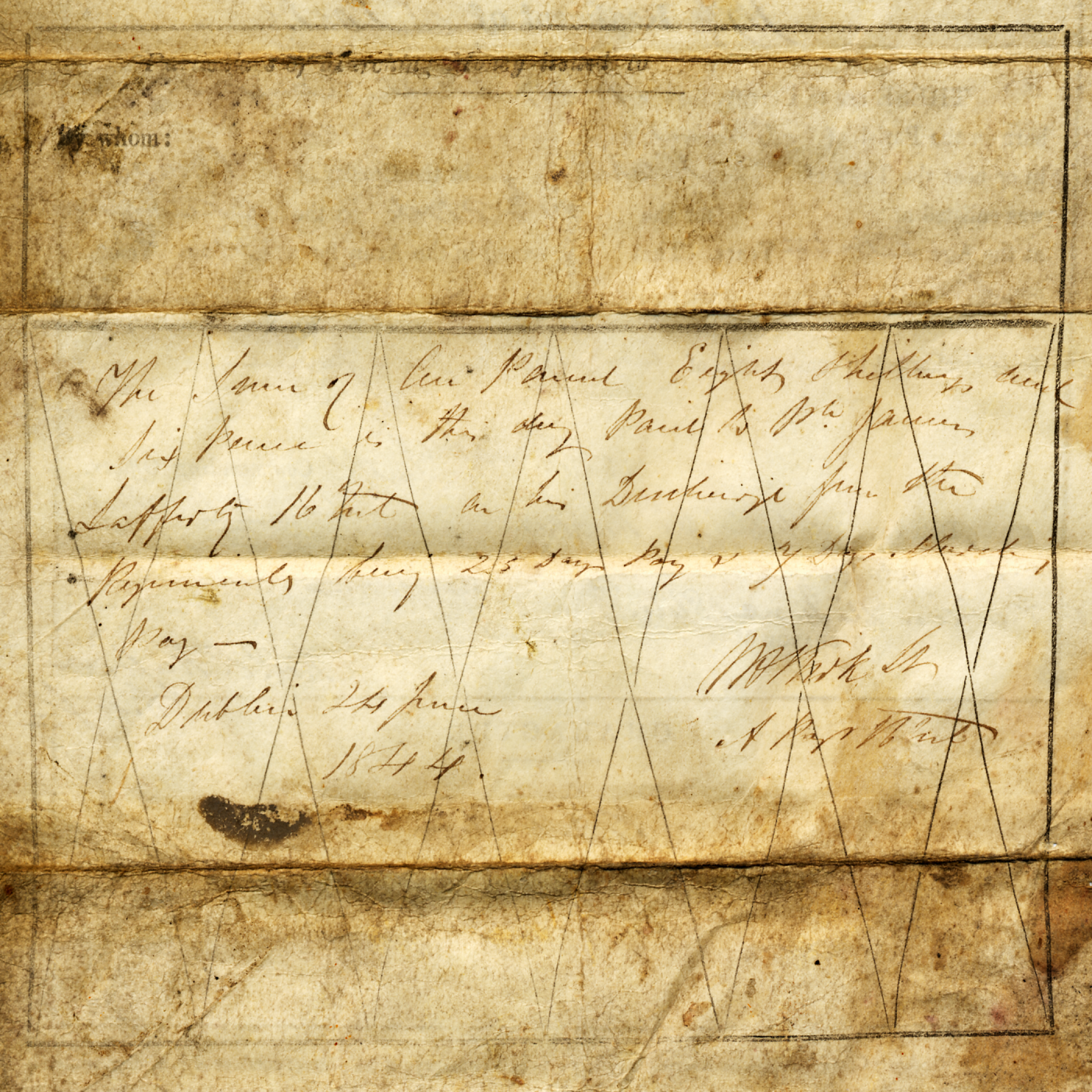
James was discharged in Dublin on May 15 after four years and three hundred and six days, "being unfit for further service". Unfortunately, it does not tell us why he was unfit. His book is made up to June 24 when the discharge was signed off by the Adjutant General's Office, also in Dublin. He received 4/11d in lieu of clothing and
"The sum of one pound eight shillings and six pence is this day paid to Pte James Lafferty 16 Foot on his discharge from the Regiment being 25 days pay + 7 days church pay —
Dublin, 24 June, 1844
??Kirk??, A Pays ????"
His character is recorded as "Very Good".
During his career, he was never promoted, never wounded and never distinguished himself.